SEO Services for Architects and Interior Design Firms
Architects and interior designers do not sell impulse purchases. They sell trust, taste, technical judgment, and the ability to carry a client from uncertainty to a built result. That changes how search engine optimization should work.
A law firm can win leads with a clear service page and a consultation form. An ecommerce brand can live on category pages and paid acquisition. Design firms sit in a more nuanced position. Their prospects often spend weeks or months researching, comparing portfolios, checking credentials, and trying to answer a private question before they ever make contact: can this firm translate my brief into a space that feels right and performs well?
That is why SEO Services for architecture and interiors require a different mindset. The work is not just about rankings. It is about making expertise visible, making the portfolio searchable, and aligning the website with the way high value clients actually choose a firm.
Search behavior in design is more layered than it looks
When firm principals say, “Most of our work comes from referrals,” they are usually right. But referrals rarely eliminate search. They simply change its role.
A referred prospect still types the firm name into Google. They still browse projects. They may search for the principal architect, the studio location, awards, press mentions, or whether the firm has done similar work before. If the referral was loose rather than warm, they might also search broader terms such as “modern residential architect in Austin” or “hospitality interior designer London.”
The search journey usually has several layers. At the top are broad discovery queries. In the middle are project type and style specific searches. At the bottom are branded searches and due diligence checks. Effective SEO Services have to support all three.
A common mistake is optimizing only for the broadest terms. Many firms want to rank for “architect in New York” or “interior designer Los Angeles.” Those phrases matter, but they are fiercely competitive and often vague. The stronger opportunities often live one level deeper, where intent is clearer. A studio that specializes in luxury multifamily interiors, adaptive reuse, workplace strategy, wellness clinics, or bespoke kitchens may win faster by building pages and project narratives around those categories.
The quality of the lead improves when the specificity improves. Traffic alone does not pay salaries. Qualified inquiries do.
Why beautiful websites often underperform in search
Design-led firms tend to invest heavily in visuals, which makes sense. The website is part portfolio, part credibility engine. Yet some of the most elegant studio websites are nearly invisible in search because they are built for impression rather than discovery.
I have seen architecture sites with full screen project pages, cinematic transitions, and almost no crawlable text. The work looked exceptional. Google, however, had little context to understand whether the project was a coastal residence, a boutique hotel renovation, or a ground-up medical office. If every page says little more than the project name, location, and a poetic two-line caption, the search engine has almost nothing to work with.
Interior design firms run into a similar issue when every portfolio item is pushed into image galleries without descriptive framing. Search needs language, not just pictures. It needs titles that mean something, supporting copy that explains the brief, and enough structure to connect the project to services, sectors, materials, locations, and client problems.
This does not mean cluttering an elegant site with blocks of generic copy. It means writing with precision. A project page can remain restrained and still carry useful semantic depth. A paragraph that mentions scope, square footage, project type, planning challenges, material strategy, sustainability goals, and the intended user experience gives both readers and search engines something to grasp.
What SEO Services should actually cover for design firms
The phrase “SEO Services” gets used loosely. For architects and interior designers, the service needs to combine technical work, editorial judgment, and business positioning.
If an agency treats your firm like a generic local business, results are usually mediocre. The process should begin with how your practice is structured. Are you trying to win local residential projects, national commercial work, developer partnerships, or press visibility? Are your strongest margins in full service interior design, architecture, procurement, master planning, or workplace strategy? Do clients choose you for style, sector expertise, regulatory experience, speed, or a certain level of client handling?
Those distinctions determine keyword strategy, site architecture, page depth, and conversion paths.
Strong SEO Services for this sector usually include the following:
- Technical SEO that fixes crawl issues, page speed problems, indexing gaps, image handling, and site structure.
- Content strategy built around sectors, services, locations, and real project narratives rather than filler blog posts.
- On-page optimization for service pages, project pages, principal bios, and expertise pages.
- Local SEO where relevant, especially for firms competing in city or regional markets.
- Measurement tied to qualified inquiries, branded search lift, and visibility for commercially important terms.
Without all five, firms tend to get partial gains. They may rank better but fail to convert. Or they may have a sharp website that no one discovers organically.
The architecture of a search-friendly architecture website
A firm website should reflect how prospective clients think, not just how the studio organizes itself internally. That sounds obvious, yet many sites are arranged around vague labels such as “Work,” “Studio,” and “Journal” without enough context.
For SEO, the site structure should help answer four basic questions quickly. What services do you provide? What kinds of projects do you do? Where do you work? Why should a client trust you with this scope?
That often leads to a practical page ecosystem. Service pages explain what the firm offers in terms clients understand. Sector pages speak to project categories such as custom homes, multifamily, hospitality, workplace, healthcare, or retail. Location pages can help if the firm actively serves and has credibility in specific cities or regions. Project pages demonstrate proof.
A well planned architecture site lets authority flow between these sections. A hospitality architecture page can link to relevant hotel and restaurant projects. A project page can point back to the service involved, the location, and the lead designer. Press mentions and awards can reinforce that authority. The result is a site that feels coherent to a visitor and legible to search engines.
One practical detail matters more than many firms realize: naming conventions. “Hill House” may be a lovely project title, but “Hill House | Contemporary Residential Architect in Marin County” gives context without sacrificing brand. The same principle applies to image alt text, internal links, and metadata. Precision beats cleverness in search.
Portfolio SEO is where many firms leave money on the table
The portfolio is usually the strongest asset on the site, yet it is often the least optimized. That is a missed opportunity because project pages can rank for long-tail queries with strong commercial intent.
Consider the difference between a project page that says only “Cedar Residence, 2023” and one that frames the project as a “Net-zero coastal residence in Santa Barbara designed for multigenerational living.” The second version aligns with how prospects search. It also creates more entry points for search around sustainability, geography, home type, and user needs.
Good portfolio SEO does not require turning each project into a case study stuffed with keywords. It requires enough thoughtful context to answer real questions. What was the client trying to achieve? What constraints shaped the design? Was the project a renovation or new build? What was distinctive about the site, program, materials, lighting, circulation, or planning? Did the work involve permits, landmark restrictions, procurement, staging, or phased occupancy?
I have seen firms increase organic entrances to project pages simply by rewriting titles, adding 150 to 300 words of intelligent supporting text, improving internal links, and compressing image files. Nothing flashy. Just clarity and discipline.
For interior design firms, project pages SEO Services can also support searches around rooms and lifestyle intent. A kitchen remodel, boutique hotel suite, luxury penthouse, pediatric clinic waiting room, or executive office fit-out each has its own search language. When that language appears naturally within a polished editorial presentation, it works.
Local visibility is not optional, even for referral-driven studios
Even firms with national or international ambitions need to take local search seriously. Many first-page opportunities come from geographic intent. A user searching “architect for brownstone renovation Brooklyn” or “high-end interior designer in Scottsdale” is usually much closer to inquiry than someone searching a broad design term.
Local SEO is often mishandled because design firms assume it is only for restaurants, clinics, or trades. Not true. Your Google Business Profile, review profile, maps presence, local citations, and city-specific authority signals all influence how discoverable you are in a regional market.
That does not mean every firm should build dozens of thin location pages. If you do not have meaningful work or presence in a city, a page targeting it will feel hollow and probably perform poorly. But where your footprint is real, location-specific pages can be powerful. A page for “Interior Design Firm in Miami” becomes much more credible if it includes local projects, permitting or climate-specific considerations, vendor relationships, press, and a few sentences that show genuine familiarity with the market.
Reviews deserve mention here. Many architects hesitate to ask for them because the work is bespoke and private. The concern is understandable. Still, a handful of strong reviews on Google can materially improve local trust signals. For interior designers, especially residential and boutique commercial practices, they can influence click-through rate as much as ranking.
Content that works in this sector rarely looks like generic blogging
A lot of agencies pitch content by promising four blog posts a month. That sounds productive. It often is not.
Architecture and interior design audiences do not need endless articles on broad topics like “Top Office Design Trends” unless those pieces are tied to a real strategy. Search content should be useful, differentiated, and close enough to the commercial core that it strengthens authority.
The best content formats I have seen for design firms usually fall into a few categories. Service explainers that demystify process are useful because clients often do not understand phases, fees, procurement, or what full-service means. Deep sector pages work because they map directly to how companies and homeowners search. Thoughtful project stories perform well because they combine inspiration with proof. Location-led insights can help in markets with unique constraints such as historic districts, wildfire zones, dense urban approvals, or coastal building codes. Educational pieces on budgeting, timelines, and renovation sequencing can also attract serious prospects, particularly in residential interiors.
The key is that each piece should earn its place. If a topic does not connect to a service, sector, or client question that matters, it probably should not be a priority.
I once reviewed a design site with more than eighty blog posts and fewer than ten meaningful service or sector pages. Traffic was scattered. Lead quality was poor. After consolidating weak content and expanding the pages tied directly to revenue, inquiry quality improved even before rankings fully caught up. More content is not the goal. Better alignment is.
Technical SEO matters more than creative teams often expect
Creative firms sometimes treat technical SEO as a back-office concern. It is not glamorous, but it has an outsized effect on performance.
Large image files are one of the most common issues. High resolution photography is central to design marketing, yet uncompressed galleries can slow mobile performance to a crawl. That hurts rankings, but it also hurts user behavior. Prospects will wait for exceptional work, though not forever. A slow project page quietly leaks interest.
JavaScript-heavy transitions can create indexing problems if content is not rendered cleanly. Infinite scroll galleries may look elegant while making it harder for search engines to parse and rank individual projects. Weak internal linking can strand important pages. Thin metadata can suppress click-through rates even when rankings are decent. Duplicate project descriptions, often caused by template shortcuts, dilute relevance.
A technical audit should not just produce a list of errors. It should prioritize issues based on impact. In my experience, architecture and interior design sites see meaningful gains when they fix a small group of fundamentals well: page speed, crawlability, image optimization, metadata, and internal links to core service and project pages.
Measuring results the right way
One reason some principals distrust SEO is that agencies report vanity metrics. A monthly dashboard may show more impressions, more keywords, and more sessions, yet the leadership team sees no meaningful lift in qualified conversations.
For architecture and interior design firms, success should be measured against business development realities. A handful of strong opportunities can matter more than hundreds of low-quality visits. A commercial interiors practice may only need a few enterprise leads a quarter to justify the investment. A luxury residential studio may care more about attracting fewer but better-aligned inquiries than filling the inbox.
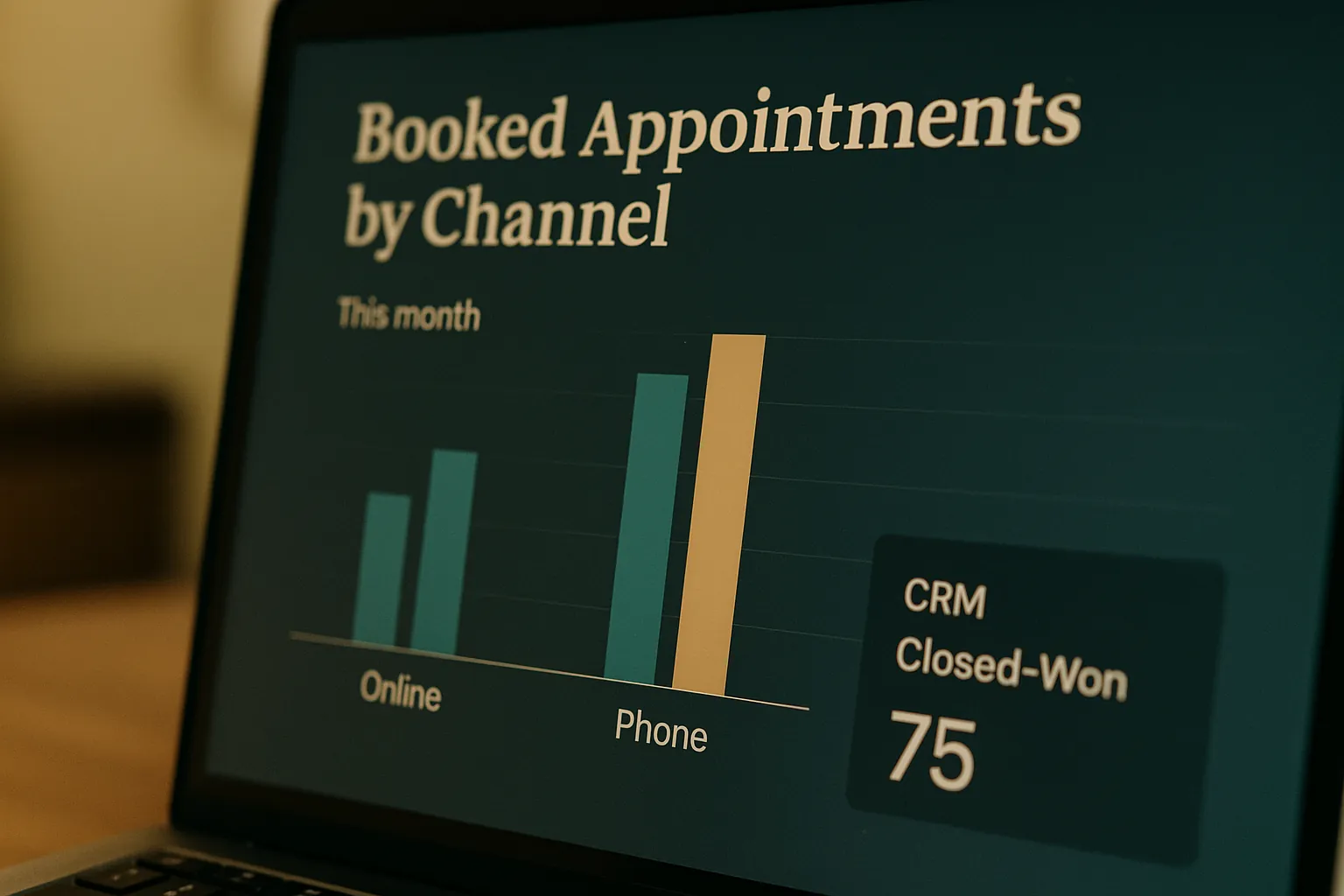
Good measurement typically includes growth in non-branded rankings for priority services and sectors, organic traffic to commercial pages rather than just blog posts, lead form quality, phone or consultation requests where relevant, branded search growth, and assisted conversions. Sales cycle length matters too. Search may introduce the firm early, then influence the prospect again months later when they return via branded search.
That lag is normal. Design services are not bought the way software subscriptions are bought. Any SEO strategy that promises instant lead flow should be treated carefully.
What firms should look for when choosing an SEO partner
The right SEO partner for a design practice needs more than tactical competence. They need enough sensitivity to the brand to avoid flattening it into generic marketing language.
That balance is not easy. Push too hard on optimization and the site starts sounding like every other agency-written service business website. Stay too precious about minimal copy and the pages never rank. The best work respects both search behavior and editorial quality.
When evaluating providers, I would pay attention to a few signals:
- They ask about project types, margins, geographies, and ideal clients before talking about keywords.
- They understand that portfolio pages are commercial assets, not just galleries.
- They can explain trade-offs clearly, especially where design choices affect crawlability or speed.
- They report on lead quality and page-level performance, not just traffic volume.
- They write or guide content in a voice that sounds like a real studio, not a marketing template.
If those signals are absent, the engagement often turns into a generic SEO retainer that produces generic outcomes.
Common edge cases and strategic trade-offs
Not every firm needs the same SEO approach. A boutique residential interior designer in one affluent suburb has different needs from a 60-person architecture practice pursuing public, healthcare, and higher education work across several states.
A small firm with limited project volume may need to be careful about how many pages it creates. If there are only six completed projects and all of them are stylistically broad, building twenty sector and location pages can look artificial. In that case, it is usually better to deepen the pages that exist, strengthen local signals, and publish a small number of highly credible supporting pieces.
A larger multidisciplinary practice often has the opposite problem. It has years of project history, many sectors, and multiple office locations, but the site lumps everything together. Here, the challenge is organizing abundance so search engines and buyers can navigate it. Often that means breaking out services, sectors, and offices more explicitly, then connecting them with robust internal links.
There is also a branding trade-off around confidentiality. Some high-end residential clients and certain commercial sectors limit what can be shared publicly. That can constrain portfolio depth. When that happens, firms can still build authority through anonymized case studies, process pages, principal thought leadership, press features, and educational content grounded in real expertise.
Another edge case is firms that depend heavily on visual discovery platforms such as Instagram, Pinterest, or Houzz. Those channels can absolutely contribute to lead generation, especially for interiors. But relying on them alone is risky. Platform algorithms change. Search remains one of the few channels where demand is already expressed. The user is telling you what they want. That is too valuable to ignore.
Where SEO and reputation meet
For design firms, search performance is tied closely to reputation. Rankings help people find you. Reputation helps them choose you.
That is why digital PR, awards pages, speaking appearances, press coverage, and authoritative backlinks matter more here than in some other sectors. A feature in a respected design publication may not flood the site with traffic, but it can strengthen trust and authority in ways that support both rankings and conversion.
The same is true of team pages. Prospective clients often search the names of principals or design directors directly. A thin biography page misses a chance to reinforce expertise. A stronger page can mention credentials, specialties, speaking engagements, publications, and notable project types while still feeling editorially restrained.
At its best, SEO does not sit apart from brand. It translates reputation into discoverability.
A practical pace for implementation
Most firms do not need a massive SEO overhaul all at once. In fact, slower and more deliberate often works better because design leadership can protect the brand voice while making commercially smart changes.
A sensible first phase usually starts with technical cleanup, keyword and market research, stronger service pages, and optimization of the highest value portfolio pieces. That alone can create lift within a few months, especially if the current site is visually strong but structurally thin. The next phase often expands sector depth, local relevance, and selective content. Authority building through press, backlinks, and thought leadership tends to compound over time.
Patience matters. In competitive city markets or premium sectors, meaningful gains can take six to twelve months, sometimes longer. That is not a SEO Services sign of failure. It reflects the reality that architecture and interior design decisions are high trust, high value, and comparatively infrequent.
What matters is direction. Are more of the right pages being found? Are better prospects arriving with clearer intent? Are branded searches increasing as awareness grows? Is the website doing a better job of helping referrals validate the firm quickly? Those are the signals that the work is moving in the right way.
For architects and interior design firms, SEO Services are most effective when they respect the nature of the business: long sales cycles, visual persuasion, nuanced positioning, and a premium on trust. The firms that gain the most are not always the loudest. They are the ones that make their expertise legible, their work discoverable, and their website useful to both search engines and serious clients.
Magister Digital AI
1135 Garnet Ave #13, San Diego, CA 92109
+16193300953
FAQ About SEO Services
What do SEO services include?
SEO services can include technical site reviews, keyword and search-intent research, content improvement, internal linking, local optimization, structured data, and performance reporting. The exact scope should reflect the business, market, and goals.
How long does SEO take to show results?
Timing varies with the website's current condition, competition, and scope. Technical improvements may show movement sooner, while competitive content and authority work often require several months of consistent effort.
Do SEO services include local SEO?
They can. Local SEO commonly covers Google Business Profile optimization, accurate business citations, local schema, reviews, and service-area or location content when those elements are relevant.
How should SEO performance be measured?
Useful measures include qualified organic traffic, calls, form submissions, booked appointments, revenue influence, and visibility for searches that matter to the business. Rankings alone do not show the full outcome.