SEO Services for Real Estate Agents: Get More Qualified Leads

Real estate agents rarely need more visibility for its own sake. What they need is visibility that turns into conversations with the right people, in the right neighborhoods, at the right stage of the buying or selling process. That distinction matters. Plenty of agents get website traffic and still complain that their phones stay quiet or that the inquiries they do receive are weak, vague, or nowhere near their service area.
That is where well-planned SEO Services earn their keep.
Search engine optimization for real estate is not about chasing vanity rankings or cramming city names into page titles. It is about putting an agent in front of people who already have intent. Someone searching “best listing agent in Scottsdale,” “condos for sale near downtown Tampa,” or “how much is my home worth in Plano” is not casually browsing. They are signaling need. When an agent appears in those moments with relevant pages, local authority, and a site that makes next steps obvious, lead quality changes.
I have seen this play out repeatedly. One small brokerage can spend months buying broad traffic through ads and collect unqualified leads from renters, out of area buyers, and serial tire-kickers. Meanwhile, an individual agent with a focused local SEO plan, a fast site, and neighborhood pages that actually answer questions can capture fewer visits but more appointments. In real estate, volume is often less important than fit.
Why real estate SEO works differently
Real estate is local, seasonal, emotional, and highly competitive. It is also unusually fragmented. A personal brand, a brokerage site, listing portals, local directories, Google Business Profiles, and social content all compete for attention. Search results for even a simple phrase can include map listings, aggregator sites, market reports, featured snippets, and pages from agents who have been building authority for years.
That means real estate SEO needs to be grounded in how people actually search.
A first-time homebuyer often starts with broad informational queries. A homeowner thinking about selling may look for pricing guidance, timing advice, or agent reviews before reaching out. An investor tends to search by numbers, neighborhoods, rental trends, and zoning questions. Relocating families care about schools, commute times, and community details. If a site treats all of those searchers the same, it leaves opportunity on the table.
Good SEO Services for real estate agents map content and optimization to those different levels of intent. The site should not only target “real estate agent in [city]” and call it a day. It should capture the earlier and more specific searches that lead to trust. By the time a prospect is ready to talk, the agent already feels familiar.
Qualified leads start with search intent, not just rankings
A common mistake is chasing high-volume keywords that look impressive in a report. The phrase “homes for sale” may pull huge search numbers, but it is broad, expensive to compete for, and often dominated by national portals. An agent will usually get SEO Services better results targeting terms that reflect a real decision path, such as “buy a home in East Nashville,” “sell my house fast in Gilbert,” or “best neighborhoods in Raleigh for young families.”
Those phrases may have lower search volume, but they often produce stronger leads because they come with context. The user already knows something about where they want to live or what they want to do. That context shortens the journey from click to contact.
This is one reason experienced SEO teams ask different questions than inexperienced ones. Instead of only asking, “What keywords do you want to rank for?” they ask, “Which zip codes matter most? Which property types are most profitable? Are you stronger with luxury listings, relocation buyers, first-time buyers, or downsizing sellers? Which neighborhoods actually convert once a lead comes in?” Those questions shape strategy.
What strong SEO Services for real estate agents actually include
A lot of agencies sell SEO as a generic package. They promise blog posts, backlinks, and monthly reports, then apply the same system to a dentist, a roofer, and a real estate agent. That usually falls flat. Real estate needs a local content engine, technical discipline, and a practical understanding of how people evaluate agents online.
The strongest SEO Services usually include five core areas:
- Local SEO work, especially Google Business Profile optimization, citation consistency, review strategy, and map visibility
- On-page optimization for city pages, neighborhood pages, service pages, and listing-related search terms
- Technical SEO, including site speed, indexing, crawl health, mobile usability, schema, and internal linking
- Content strategy built around buyer, seller, and neighborhood intent
- Authority building through digital PR, link earning, local partnerships, and trustworthy brand signals
None of those works especially well on its own. I have seen agents invest heavily in content while their site loads slowly and important pages remain unindexed. I have also seen agents obsess over technical cleanup but publish almost nothing useful about the areas they serve. Search performance improves when those pieces reinforce each other.
The local map pack is often the fastest path to better leads
For many agents, the map pack on Google is more valuable than a traditional organic ranking. When someone searches for an agent near a specific area, the map results tend to attract high-intent clicks. Searchers can immediately compare reviews, proximity, business details, and sometimes recent posts or photos. That is a powerful trust filter.
A strong Google Business Profile is not a side task. It is often a lead channel in its own right. Agents who perform well there usually have complete profiles, accurate categories, real client reviews that mention neighborhoods or service quality, fresh photos, and a steady signal of business activity. They also make sure that their name, address, phone number, and website details are consistent across major directories and local citations.
Reviews deserve special attention. In real estate, people do not just want proof that an agent is competent. They want proof that the agent is responsive, calm under pressure, good at negotiation, and familiar with the local market. Reviews that mention those specifics carry more weight than generic praise. They also help search engines understand relevance.
Neighborhood pages are where real estate SEO often wins
Many real estate websites stop at city-level pages. That is a missed opportunity. Buyers and sellers rarely think in broad municipal terms alone. They think about specific neighborhoods, school districts, condo buildings, price bands, and commute patterns. A useful neighborhood page can rank for highly specific searches and also convert better because it feels closer to the prospect’s actual decision.
The key is usefulness. Thin pages with a paragraph of generic copy and an IDX feed do not perform nearly as well as pages that answer practical questions. A strong neighborhood page might discuss housing stock, price tendencies, buyer profile, walkability, common trade-offs, local amenities, and the kinds of homes people can expect. It should sound like it came from someone who has been there, not someone who copied census language into a template.
I once reviewed two sites serving the same metro area. Both had roughly similar domain strength. One had fifty neighborhood pages with nearly identical phrasing and little value beyond listings. The other had fifteen pages, each written with genuine local detail, custom FAQs, and internal links to related buying or selling guides. The second site outranked the first in more of the neighborhoods that mattered and produced more inquiries from those pages. Depth beat volume.
Sellers and buyers should not land on the same message
One subtle problem on many real estate sites is that all traffic funnels into the same general homepage or catch-all service page. That weakens conversion. Buyers and sellers have different anxieties, different timelines, and different search language.
A seller landing on a page after searching “how much is my house worth in Charlotte” wants confidence in pricing, market timing, and the listing process. A buyer searching “townhomes near uptown Charlotte under 500k” wants inventory context, financing awareness, and guidance on neighborhoods. If both arrive on a generic “we help clients buy and sell homes” page, the message lands softly.
SEO works better when content paths match intent. Seller pages should connect naturally to valuation tools, local market reports, and case-based proof of pricing strategy. Buyer pages should move toward neighborhood research, financing readiness, and property alerts. This is not just a conversion issue. It is also a relevance issue for search engines, which increasingly reward pages that solve a specific need well.
Technical SEO is invisible until it costs you leads
Real estate websites are often burdened by large images, plugin clutter, IDX integrations, duplicate pages, and poorly managed site structures. The result is familiar: slow load times, pages that do not get indexed properly, and weak internal linking that leaves important pages buried.
Technical SEO can sound abstract, but the consequences are practical. If a neighborhood page takes several seconds to load on mobile, a potential buyer may leave before even seeing the content. If duplicate property or area pages confuse search engines, rankings become unstable. If title tags and headings are vague, important pages miss obvious relevance signals.
A clean technical foundation does not guarantee rankings, but a weak one quietly drags everything down. For real estate agents, the basics matter more than gimmicks. Pages should load quickly on mobile connections. Site architecture should make it easy to move from broad service pages into deeper local content. Canonical issues should be controlled, especially where IDX content is involved. Important pages should be indexable and internally linked from appropriate supporting content. The site should also make conversion effortless, with visible contact paths and forms that do not ask for too much too soon.
Content that earns trust usually sounds less like marketing
The best-performing real estate content often does not read like sales copy. It reads like useful field guidance.
A page about moving to a neighborhood should acknowledge trade-offs. If parking is difficult, say so. If homes move quickly under a certain price point, explain that. If one area appeals more to investors while another suits families who want larger lots, make the difference clear. That honesty builds trust. Searchers can sense when every neighborhood description sounds equally perfect.
This is where lived experience matters. Agents who know their markets can create content that national portals rarely match. They can explain why one side of a district feels quieter, why a particular school boundary changes demand, or why condo buyers should pay attention to building reserves and rental caps. Those details attract qualified leads because they help prospects make real decisions.
There is also a compounding effect. Helpful content keeps visitors on site longer, encourages sharing, earns backlinks more naturally, and gives sales conversations a stronger starting point. Instead of beginning with, “Tell me what you’re looking for,” the agent can begin with, “I saw you downloaded our guide to relocating to North County. Which areas stood out to you?” That is a better conversation.
What a realistic timeline looks like
SEO is not instant, and any provider promising rapid domination of a competitive market should raise concerns. Realistic timelines depend on market size, competition, site condition, and how much useful content already exists.
In a smaller market with a decent site foundation, local visibility gains can show up SEO Services within a few months, particularly through Google Business Profile improvements and on-page optimization. In larger or more competitive cities, meaningful organic growth often takes longer, commonly six to twelve months before the strongest gains become clear. More competitive categories, such as luxury real estate in major metros, can take even longer.
That said, the timeline should not be confused with passivity. Good SEO work is active from the beginning. There should be technical fixes, page improvements, content development, local optimization, and better conversion paths early in the process. Even before rankings peak, those changes can improve the value of existing traffic.
How to judge whether SEO is bringing the right leads
Traffic alone is a poor measure for most agents. It is too easy to grow sessions without improving business outcomes. Better indicators focus on lead quality and fit.
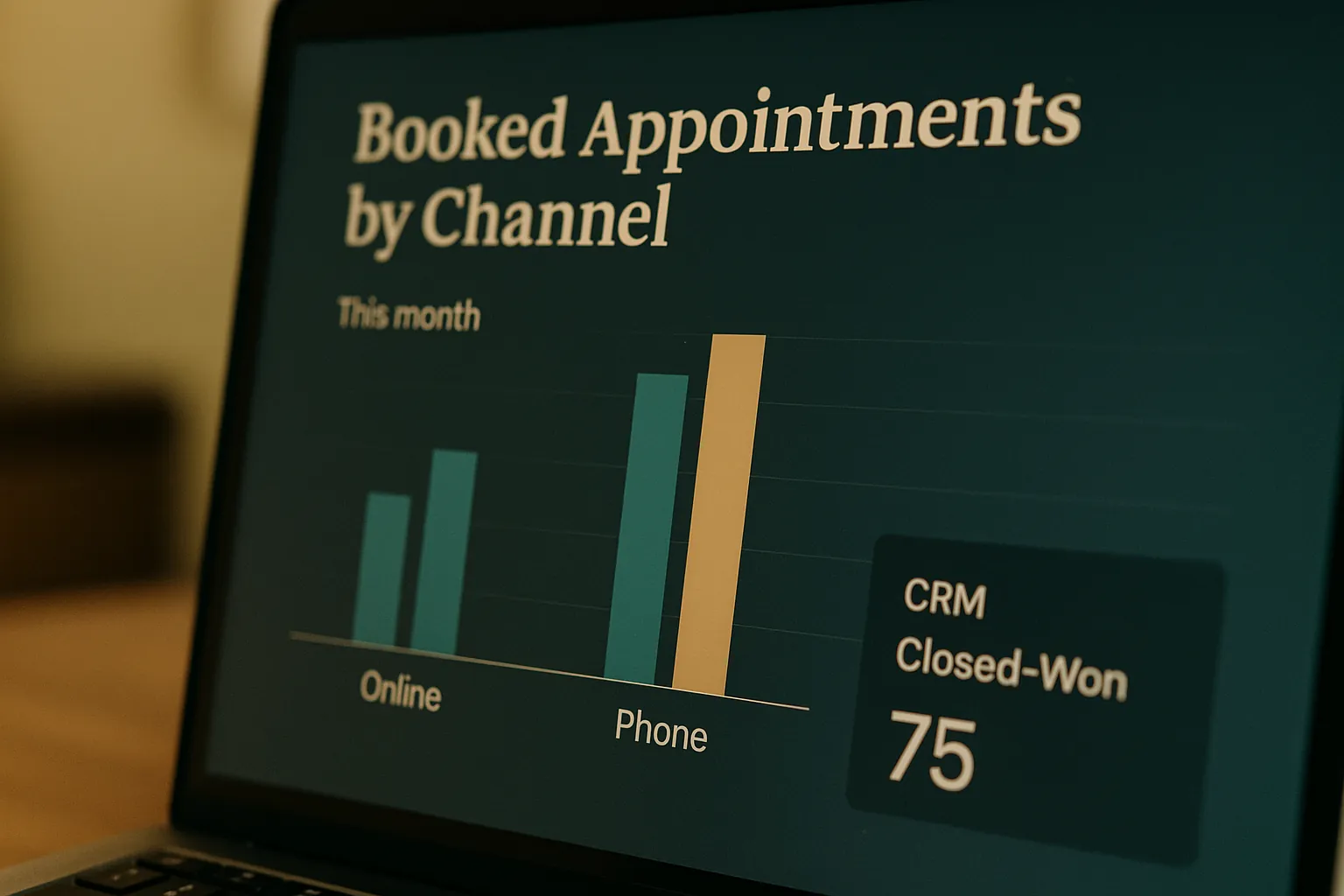
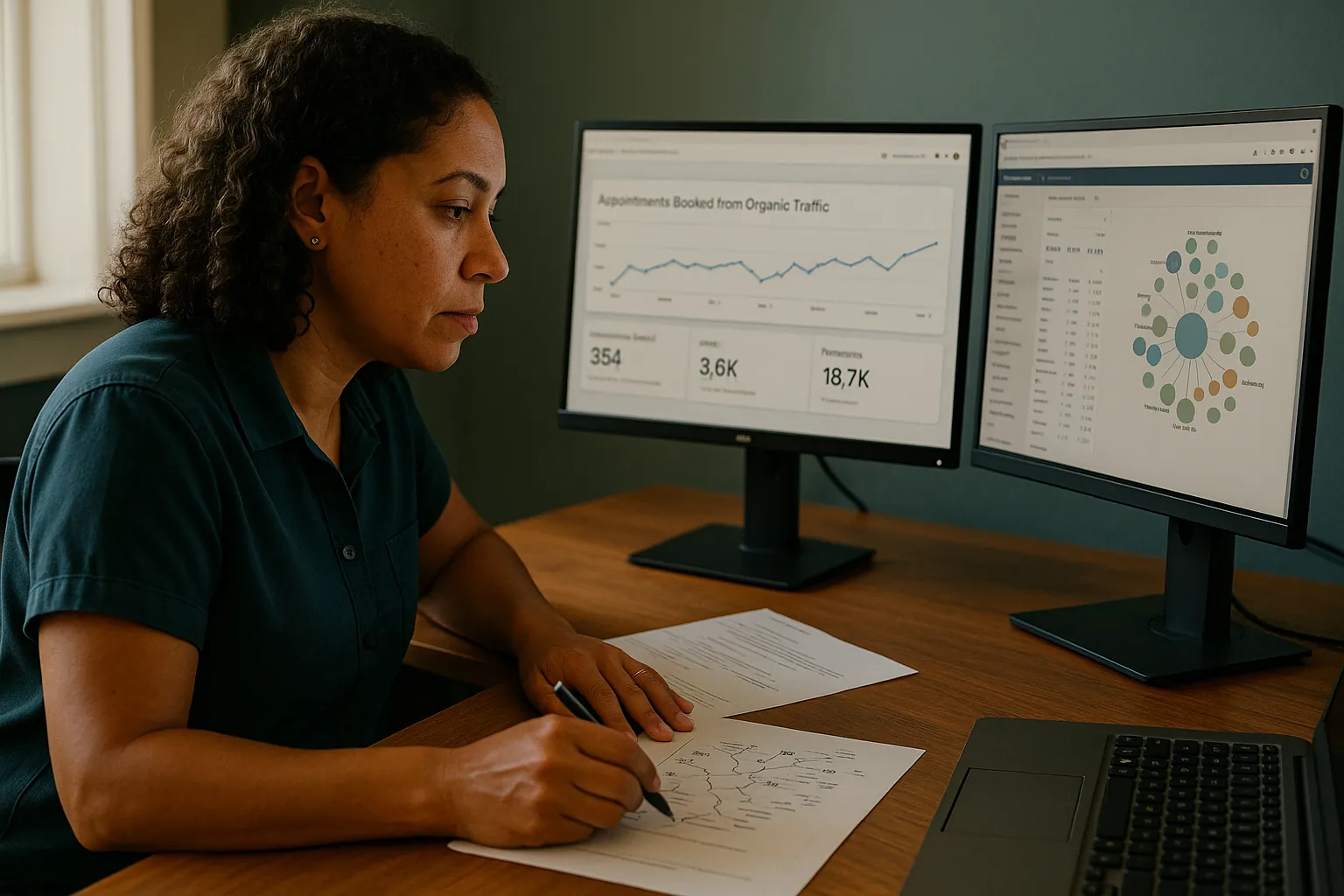
Watch for signs like stronger local search visibility in target neighborhoods, more inquiries tied to specific service areas, longer on-site engagement with neighborhood and service pages, more calls or form submissions from seller-intent content, and better appointment rates from organic traffic compared with paid channels. When SEO is working, the pattern usually becomes obvious in conversations, not just dashboards. Prospects mention the exact page they found. They refer to a guide they read. They sound informed and geographically relevant.
One of the most useful habits is to ask every new lead where they found you and what they searched for. Many agents skip this and lose valuable insight. Over time, those responses help refine content priorities and reveal which pages actually influence serious prospects.
Choosing the right SEO partner for a real estate business
Not every agent needs a large agency. Not every solo consultant can handle a multi-office brokerage. Fit matters.
A good SEO provider should understand local competition, buyer and seller intent, and the quirks of real estate websites. They should be able to explain why certain pages deserve focus, how local authority is built, and what success will realistically look like over time. They should also talk about lead quality, not just impressions and rankings.
When evaluating providers, pay attention to how they think. Do they ask about your service area profitability, your typical client profile, and which neighborhoods close best for you? Do they understand the difference between a visibility problem and a conversion problem? Do they address reviews, map presence, and site performance alongside content? Those are encouraging signs.
It is also worth being cautious with agencies that produce large volumes of generic blog content because “fresh content” sounds good in a report. Ten average posts on broad topics rarely outperform two excellent local resources tied to high-intent searches. In real estate, relevance usually wins.
Common mistakes that quietly undermine results
Some errors are so common that they almost seem normal in the industry. They still cost leads.
Here are a few that show up often:
- Publishing thin city and neighborhood pages stuffed with keywords but lacking real insight
- Relying too heavily on IDX listing pages and expecting them to carry organic growth
- Ignoring Google reviews or failing to guide happy clients toward detailed feedback
- Sending all organic traffic to a generic homepage instead of intent-matched landing pages
- Treating SEO as separate from conversion design, follow-up process, and local reputation
Each of these mistakes is fixable, but they require attention. A page can rank and still fail if it does not help the visitor take a confident next step. An agent can have strong reviews and still lose visibility if their site structure is weak. SEO is rarely one lever.
SEO and paid ads are not enemies
Some agents assume they need to choose between SEO and paid lead generation. In practice, the best strategy often uses both, with different expectations.
Paid ads can create immediate visibility for urgent goals, new markets, or seasonal pushes. SEO builds durable visibility that does not disappear the moment ad spend stops. Over time, strong SEO often reduces dependence on expensive paid channels, especially in markets where cost per lead keeps rising and lead quality varies widely.
There is another advantage to running both. Paid campaigns can reveal which messages and search themes convert fastest, and those insights can inform SEO priorities. Likewise, high-performing SEO pages can inspire more effective ad landing pages. When the two channels are aligned, the business learns faster.
The real payoff is better conversations
Most real estate agents do not wake up wanting higher click-through rates or cleaner index coverage. They want more signed listings, more buyer consultations, and a pipeline that is less dependent on unpredictable referrals. SEO matters because it supports those outcomes.
When it is done well, SEO Services help an agent show up where serious prospects are already looking. They create a digital presence that feels credible before the first call. They turn local knowledge into searchable assets. They attract people who are not just browsing real estate, but actively evaluating where to live, when to sell, and who to trust.
That is the difference between more traffic and more qualified leads. For real estate agents, it is the only difference that really counts.
Magister Digital AI
1135 Garnet Ave #13, San Diego, CA 92109
+16193300953
FAQ About SEO Services
What do SEO services include?
SEO services can include technical site reviews, keyword and search-intent research, content improvement, internal linking, local optimization, structured data, and performance reporting. The exact scope should reflect the business, market, and goals.
How long does SEO take to show results?
Timing varies with the website's current condition, competition, and scope. Technical improvements may show movement sooner, while competitive content and authority work often require several months of consistent effort.
Do SEO services include local SEO?
They can. Local SEO commonly covers Google Business Profile optimization, accurate business citations, local schema, reviews, and service-area or location content when those elements are relevant.
How should SEO performance be measured?
Useful measures include qualified organic traffic, calls, form submissions, booked appointments, revenue influence, and visibility for searches that matter to the business. Rankings alone do not show the full outcome.